What’s Happening In Model Railroading - October 2026 - Lance Mindheim
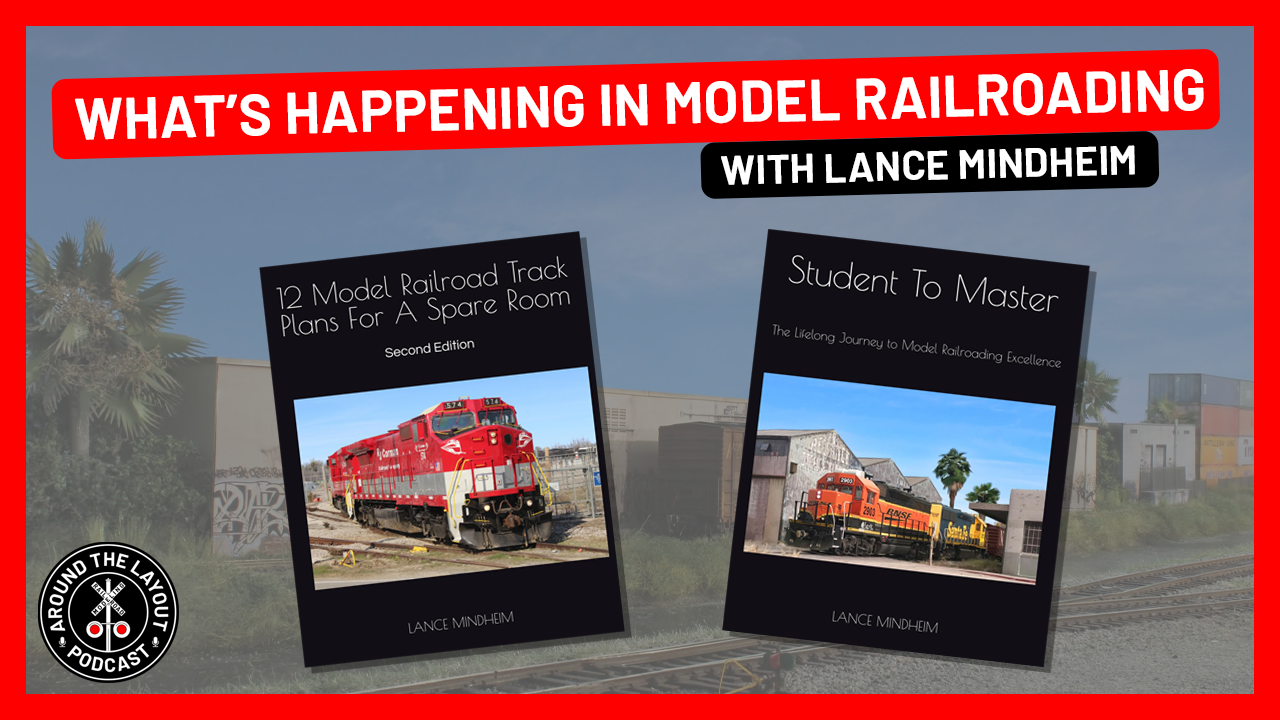
Lance Mindheim returns to Around The Layout Podcast to discuss his two recent books—12 Model Railroad Track Plans for a Spare Room, 2nd Edition and Student to Master: The Lifelong Journey to Model Railroading Excellence. The conversation explores how model railroaders can apply lessons learned from decades of modeling experience, focusing on the balance between detail, visual impact, and the bigger picture of layout design.
In this episode, Lance examines why many modelers struggle to reach the standard they imagine and considers how both personal growth and shared mentorship can shape a more satisfying experience. The discussion touches on the evolution of design approaches, the role of artistic principles, and why “less is more” can be a useful guideline in both track planning and scenery decisions.
About This Episode
The central question in this episode is how modelers can learn to see their work with fresh eyes and progress from “student” to “master”—not through the accumulation of tips, but by understanding the elements that contribute most to the look and feel of a scene. Mindheim describes how both books emerged from conversations within the model railroading community, observing recurring frustrations and gaps in mentorship.
Rather than focusing solely on technical detail or rivet-counting, the discussion emphasizes composition, color choices, negative space, and the process of evaluating one’s own work over time. By revisiting and revising his earlier track plan book, Mindheim demonstrates how continuous learning and practical experience lead to cleaner designs and more purposeful layouts, especially when space is limited.
What We Discuss
Moving Beyond Tips: Visual Impact and Composition
Mindheim argues that model railroading publications and clinics often emphasize highly specific techniques or “tips” at the expense of discussing broader visual principles. He suggests that the most noticeable improvements come from choices about scene composition, color, and placement—not just small technical details. Recognizing what the eye truly notices, and learning to see with greater visual literacy, can significantly change the outcome of a layout.
Trimming Back: The Value of Restraint in Layout Design
The episode explores the temptation to fill available space with as much track and as many structures as possible. Mindheim reflects on his own process of revisiting old track plans, mentally operating sessions, and paring down the number of turnouts or towns to create more manageable, enjoyable layouts. The approach highlights the importance of negative space and how leaving room between elements enhances the overall feel.
Reevaluating Mentorship and Convention Programming
Mentorship in the hobby often defaults to sharing technical how-tos without connecting them to larger goals. Mindheim sees room for improvement in how conventions and other model railroad gatherings set topics for clinics—advocating for a more intentional approach that prioritizes foundational concepts like scene-building and composition, rather than a patchwork of niche presentations.
Experimentation and Self-Assessment
The conversation acknowledges that growth comes from experience, experimentation, and periodic self-assessment. Mindheim encourages modelers to build, reflect, and apply lessons learned—even if that means tearing down and rebuilding. By recognizing that skills accumulate over time and that everything on a layout can be recycled, modelers can shift away from the mindset that each project must be permanent or perfect from the beginning.
Key Takeaways
• Mindheim prioritizes scene composition and color over technical detail as the elements that most affect visual impact.
• Restraint in layout planning, such as limiting the number of turnouts and leaving negative space, can lead to a more satisfying result.
• Recurring conversations within the hobby point to the need for better mentorship focused on big-picture concepts, not just specific modeling “tips.”
• Layouts and skills both improve over time through reflection, experimentation, and revisiting earlier work.
• The most effective inspiration often comes from learning to see as an artist would: evaluating what truly defines a scene and making deliberate choices to support it.
Links
For more on new product annoucements, subscribe to the da joe trains YouTube channel:
https://www.youtube.com/@da-joe-trains
Purchase Lance Mindheim’s new books on Amazon:
https://www.amazon.com/stores/author/B003LRDVXC
